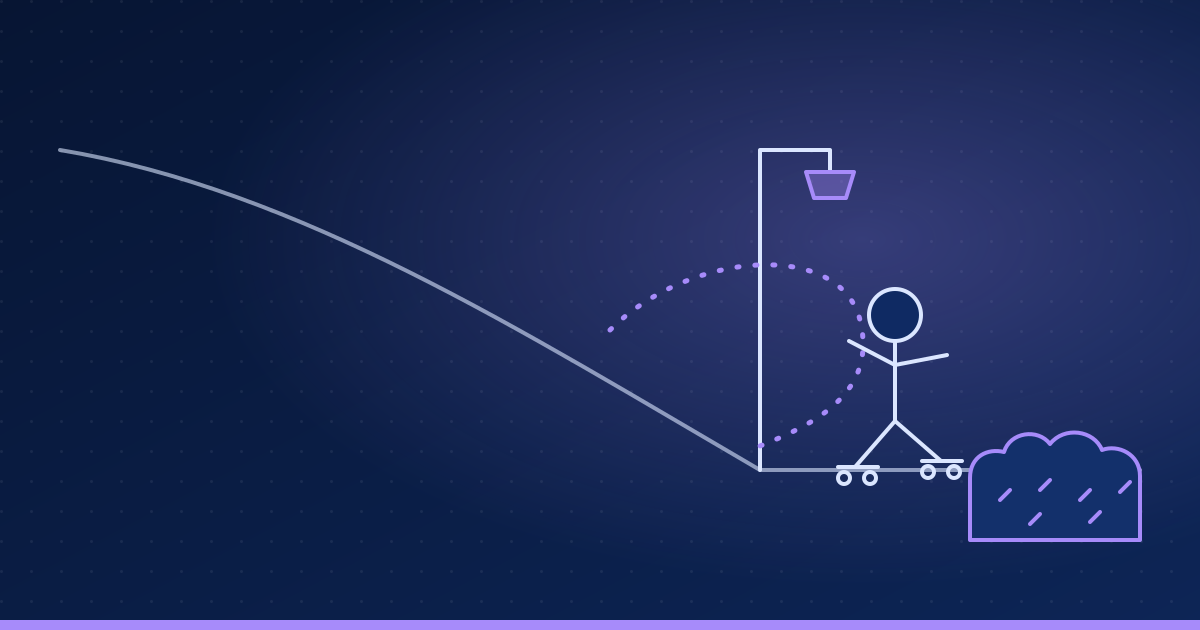
When I was young, I went down a hill on rollerblades before I knew how to brake. I grabbed a lamppost, swung around it, and landed in the bushes. I came away with more confidence on skates and a very clear idea of what I needed to learn next.
In The Scarily Accurate Murphy's Law, Doris Walton's "Confidence Law" puts it this way: "The more confident you are, the easier it is to succeed." (Chapter 2, "Mastering Emotion," p. 46.) I think about that when someone wants to polish a product for another month before showing it to anybody. Confidence gets you to try. The first try shows you what you missed.
Give version one a job
On October 22, CNBC reported that Meta shares fell after the company raised its AI spending forecast. The scale is different for a small business, but the news raises a question I'd ask before funding any product: what would I need to see before I put more money into this?
That's where I start when I scope a minimum viable product, or MVP. Pick one thing customers need to be able to do. Then build enough for real people to try it. Peter Sims calls this kind of small experiment a little bet. You learn something while the next decision is still cheap to change.
Think about asking Alexa to turn off a light. Did the light go off? That's the test. If someone tells me they love how simple it felt, I want to know what made it feel simple so we can keep it. Then I want to see whether they can get the same result the next time on their own.
Does it need brakes or a stereo?
A car needs brakes. A stereo makes the drive nicer. When somebody asks for another feature, I ask one question: If this feature were missing, would customers walk away?
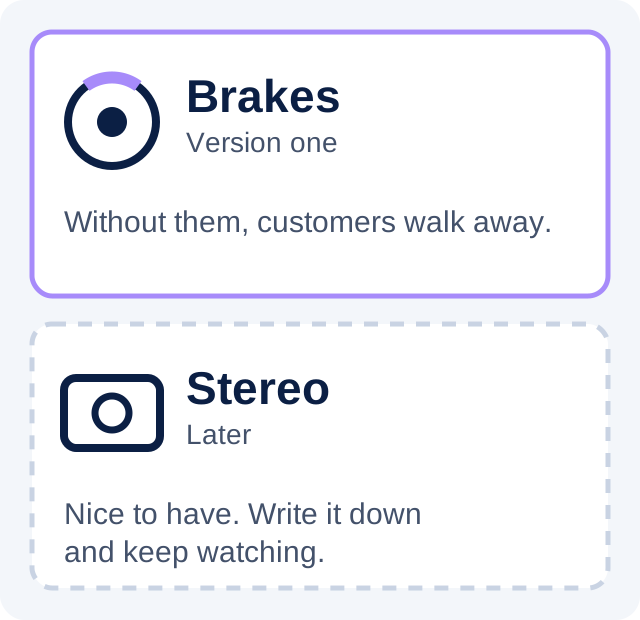
Say version one is a booking tool. If people can choose a time but never get a confirmation, they may give up because they don't know whether they have an appointment. I'd fix that first. If they can book with confidence and ask for a way to collect loyalty points, I'd write it down and keep watching how they book.
Get the first version into someone's hands while you can still change it easily. Watch where they get stuck. If they can do what they came to do and come back when they need it again, you have a better reason to build version two. Before anything else goes in, ask the same question again: If this feature were missing, would customers walk away?