This week was a reminder that markets move faster than technology does.
On Thursday, November 5, Nvidia closed at $181.60, down 9.26 percent, as investors sold AI and chip stocks amid election uncertainty and worries about demand, Yahoo Finance reported. That same day, Reuters reported that tech stocks were headed for their worst decline since June, with the semiconductor index falling as much as 11 percent, its worst performance since March 2020. Investors quoted in that report pointed to heavy AI spending, higher borrowing costs, and large tech companies issuing more stock and bonds to pay for it.
The business itself hasn't stalled. In its most recent quarterly report, Nvidia said revenue reached $96.2 billion, up 106 percent from a year earlier, with $89.0 billion coming from its data center business (Nvidia's second-quarter fiscal 2027 results). Investors are now waiting for its next update on November 17.
So is this a boom or a bubble? I think it's a real boom with a financing problem, and I'm still glad to be building in the United States. The customers are here, the tools keep getting cheaper, and a small company can test an idea with AI for the cost of a few software subscriptions. A market adjustment changes the price of AI stocks. It doesn't change what these tools can do for your business tomorrow morning.
Three ideas help me make sense of it.
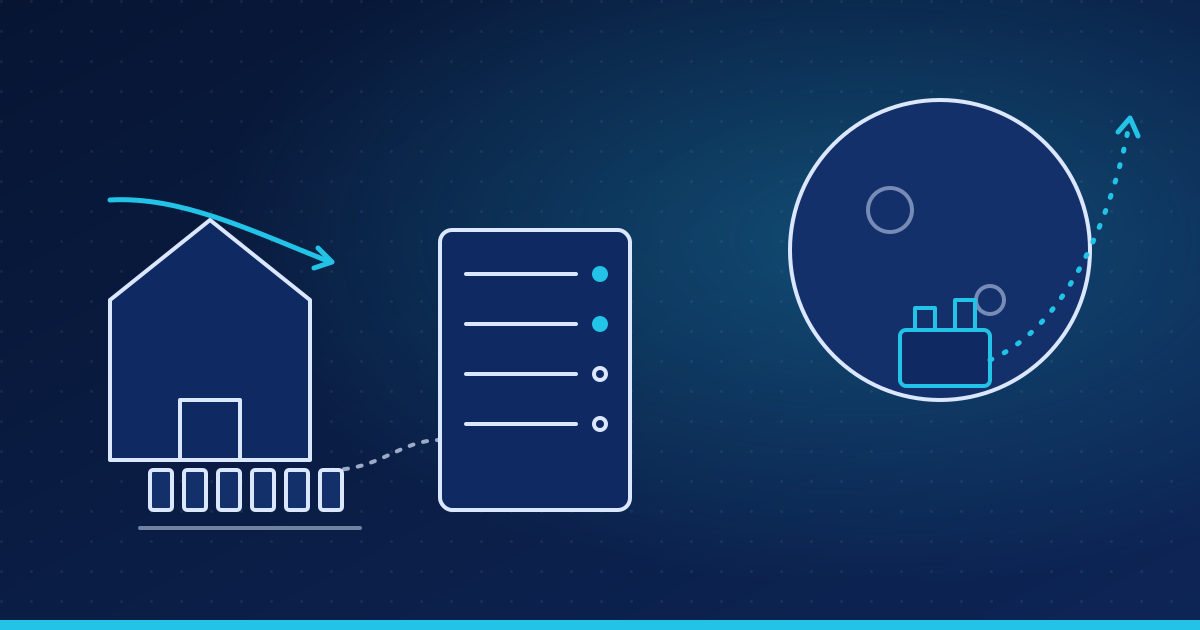
A house can lose value while the mortgage stays the same
If you've ever bought a house near the top of a market, you know this feeling. The value can fall on paper, but the payment due on the first of the month doesn't move. The loan was sized for a future that didn't show up on schedule.
A lot of AI infrastructure is being financed the same way. Chips and data centers are paid for today, against revenue expected later. In its October 2026 Global Financial Stability Report, the International Monetary Fund warned that weaker or less durable AI investment and profits could lead to a correction in AI-related asset prices, and that "corrections could be amplified by rising leverage and concentrated exposures" (IMF).
China shows where heavy borrowing against rising asset values can lead. The IMF's 2025 review of China describes a "protracted adjustment in the property sector" that spilled into local-government finances "amid a debt overhang," weighing on demand (IMF 2025 Article IV report). The IMF has said some of that local-government debt will need to be restructured (IMF staff statement).
To be clear about what I'm saying: I haven't seen evidence that a Chinese AI bubble burst, or that China caused this week's U.S. selloff. China's lesson is about leverage, not chips. My own read of the U.S. selloff is that investors are repricing how quickly all this spending will pay back. That's my interpretation, not a settled fact.
For a small business, the lesson is simple. Borrow against what you can already show, and keep your payments within what today's revenue can cover.
Stocks reprice in an afternoon. Houses build value over a decade.
A stock can lose 9 percent between lunch and the closing bell. Houses mostly don't work like that. The Federal Housing Finance Agency reported that U.S. house prices rose 2.1 percent from the second quarter of 2025 to the second quarter of 2026, with prices up in 46 states and the District of Columbia (FHFA). Slow, unremarkable and steady.
Here's my outlook, and it's only that. AI stocks could spend the next three to seven years working through an adjustment, the way markets often digest a big buildout. At the same time, I expect AI to keep getting more useful every year for the next decade, in the unglamorous places where small businesses live: quotes, scheduling, bookkeeping and customer replies.
Both can be true at once. What the market pays for the companies building AI, and what AI is worth to the companies using it, don't have to move together. Judge AI by the hours it gives you back, not by the stock chart.
A factory on the Moon
The boldest answer to AI's limits came from Elon Musk. In February, TechCrunch reported that Musk told xAI employees the company may eventually need a factory on the Moon to build AI satellites, launched into space by an electromagnetic catapult known as a mass driver. His stated reason was to reach more computing power than rivals could get on Earth. xAI later laid out its plans publicly in an all-hands meeting it posted online (TechCrunch).
It sounds far-fetched, but it's worth taking seriously, because on Earth the limit is increasingly electricity, not chips. Data centers may wait years for full grid service, or accept provisional connections that can be cut when the grid is strained, Fortune reported.
Whether a lunar factory ever pays off will come down to four costs:
- Launch: every kilogram that leaves Earth, and everything sent onward from the Moon, has a price.
- Cooling: in a vacuum there's no air or water to carry heat away, so it has to radiate off into space.
- Maintenance: no technician can drive over to swap a failed part.
- Financing: someone has to lend against a factory about 239,000 miles away, years before it earns anything.
SpaceX is candid about the risk. Its IPO filing says its lunar and Mars goals involve unproven technologies and may not achieve commercial viability (SpaceX registration statement, as summarized by CNN). Its investor presentation still lists a goal of a sustainable presence on the Moon for science, exploration and industrialization (SpaceX investor presentation).
This is where the tortoise and the hare come in. Musk looks like the hare, because every step seems to arrive faster than the rest of us expect. But the overall plan is the tortoise. Reusable rockets make lunar logistics cheaper, lunar logistics make manufacturing possible, and each piece builds on the last over years. The hare gets the headlines. The tortoise compounds.
Build first, borrow second
Picture a founder in Ohio with an idea for a scheduling tool for small landscaping crews. A few years ago, testing it might have meant a bank loan and six months of development. Today she can use AI tools to build a working prototype over a couple of weekends, put it in front of five crews, and watch which buttons they actually press. (If you're weighing a first test like this, I'd start with where small businesses should start with AI and how to scope an MVP so the prototype stays small.)
If three of them will pay for it, she walks into the bank with customers instead of a pitch. If none will, she has learned that for the price of a few subscriptions, not a loan payment that outlasts the idea.
That's the mortgage lesson at small-business size: let the value show up before the payment does. The markets will sort out what AI companies are worth. You can start building something worth paying for this week.
This article reflects the author's views and is for general information only. It isn't investment, financial or legal advice.