

When someone asks me which cloud platform they should use, I usually answer with a question: what does the business need it to do on a normal day, and on its busiest one?
I'd rather understand the requirements than recommend technology a business has to grow into. And I count the whole cost of running a setup, not just the hosting bill: the people who look after it, maintenance, support, room to grow and the vendors involved.
The scenarios below are hypothetical examples illustrating our approach. They do not describe client engagements or measured results.
Understand it first. Keep it simple. Count every cost.
The technology is the last thing we choose, not the first. A smaller cloud bill isn't a saving if running the new setup costs more in people and contracts.
- Understand it first. What the business does, how busy it gets, and who will look after it.
- Keep it simple. The tools big tech companies use solve problems most businesses don't have.
- Count every cost. Not just the bill. The people, contracts, upkeep and risk that come with it.
- Pick what your team can run. A managed service can beat cheaper hosting that needs expensive specialists.
Three examples
Where to host a growing online store
The short version: Pay someone to run the boring parts so you can sell.
Picture an online shop selling outdoor gear. It runs on a self-hosted store with dozens of plugins, looked after by one part-time freelancer. The site slows down on busy days, plugin updates break things, and the freelancer spends more time fixing the server than improving the shop.
What we'd do
- Watch the busy days. Where the store slows down, what breaks, and what it costs in lost orders.
- Compare real choices. A bigger server, a cloud rebuild, a fully hosted store platform, or a custom build.
- Ask who keeps it safe. Servers, security updates and card payments all need an owner.
- Move what customers use. Rebuild only the features shoppers rely on, and swap most plugins for built-in tools.
How we'd know it worked
- The store stays quick on its busiest day
- The freelancer's hours go into the shop, not repairs
The catch: A hosted platform charges a monthly plan and small fees per sale, which can look higher than server rent. Counting repair hours and lost orders, it usually comes out ahead.
What the business gets: A store that stays up when it matters, and fewer things to break.
Removing the one server that can take you down
The short version: Fix the one thing that can take you down, not everything at once.
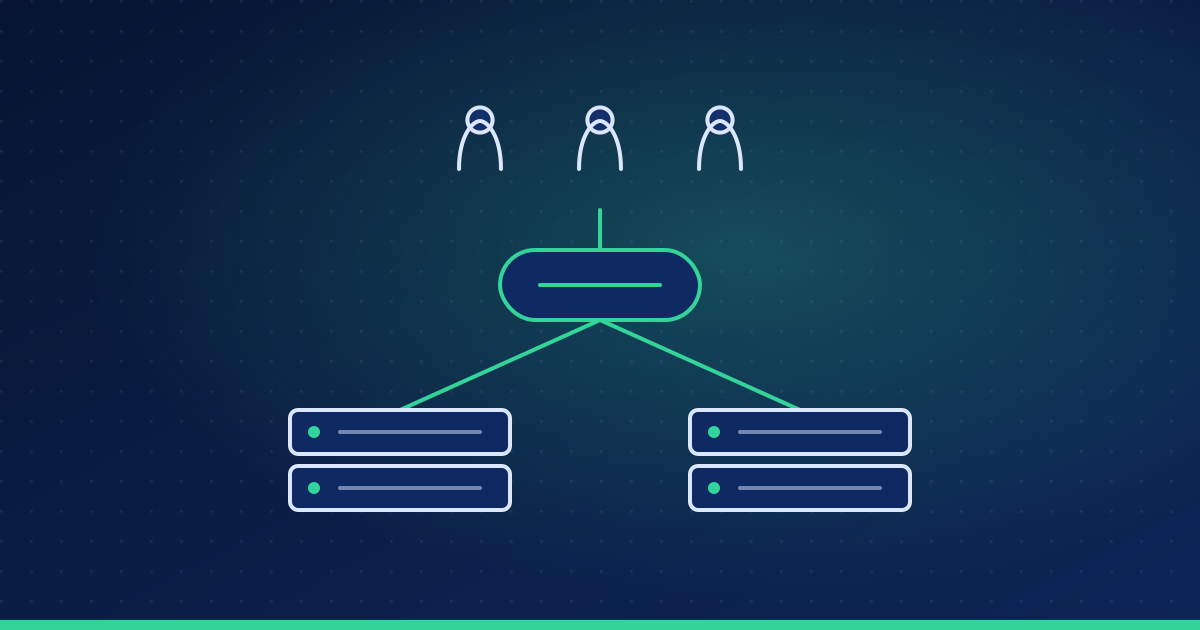
A small software company runs its whole product on one server. A large customer wants to sign, but first asks what happens if that server fails. Honestly, everything stops. An adviser suggests rebuilding the product as many small services on a complex platform.
What we'd do
- Find the real risk. One server holding the app, the database and the background jobs.
- Fix that, not everything. Two app servers that share the work, and a managed database with a standby copy.
- Write it down as code. So the setup can be rebuilt the same way every time.
- Test a failure. Switch a server off on purpose and check the product carries on.
How we'd know it worked
- The product keeps running when one server is switched off
- The customer gets a straight, tested answer
The catch: Two servers and a managed database cost more each month than one server. The rewrite would cost far more in time, and losing the deal would cost more still.
What the business gets: No single box that can take the product down, and no pause on new features.
A cloud bill that grew faster than the business

The short version: Clean the house before you sign a long lease.
A software company's cloud bill doubled in a year while customers grew far less. Nobody is sure what half of it pays for. A sales rep offers a big discount for a multi-year commitment. Signing now would lock in paying for the waste.
What we'd do
- Label everything. Every resource tagged by product and purpose, so the bill can be explained.
- Clear out the forgotten. Old servers, old backups and logs kept forever.
- Resize to real use. Servers sized to what they actually do, and test copies switched off at night.
- Then commit, carefully. After a few steady months, take a discount only on the steady base.
How we'd know it worked
- Finance can explain every line of the bill
- Commitments cover only what's really used
The catch: The clean-up takes some engineering time, done carefully so the live product isn't disturbed. The savings come back every month.
What the business gets: A bill finance can predict, and no paying for forgotten resources.
What we count before recommending anything
- Hosting fees
- Software subscriptions
- Updates and upkeep
- Someone watching for problems
- Backups and test restores
- Security tools and reviews
- Staff time and training
- Support contracts
- The cost of complexity itself
The short of it
Most cloud problems are solved by doing less, more carefully. The right answer is the one your team can run on a normal Tuesday.
However the work starts, we prefer a clearly scoped project: defined deliverables, a practical budget, documentation and a proper handover, so your team can run what we build without needing us.
This is the thinking behind PreciseMP's Cloud Solutions & Infrastructure service.
Related reading: Before You Move to the Cloud, Know What You're Paying For and The Future of Cloud Infrastructure: Why Efficiency, Not More Computing Power, Will Drive the Next Revolution.